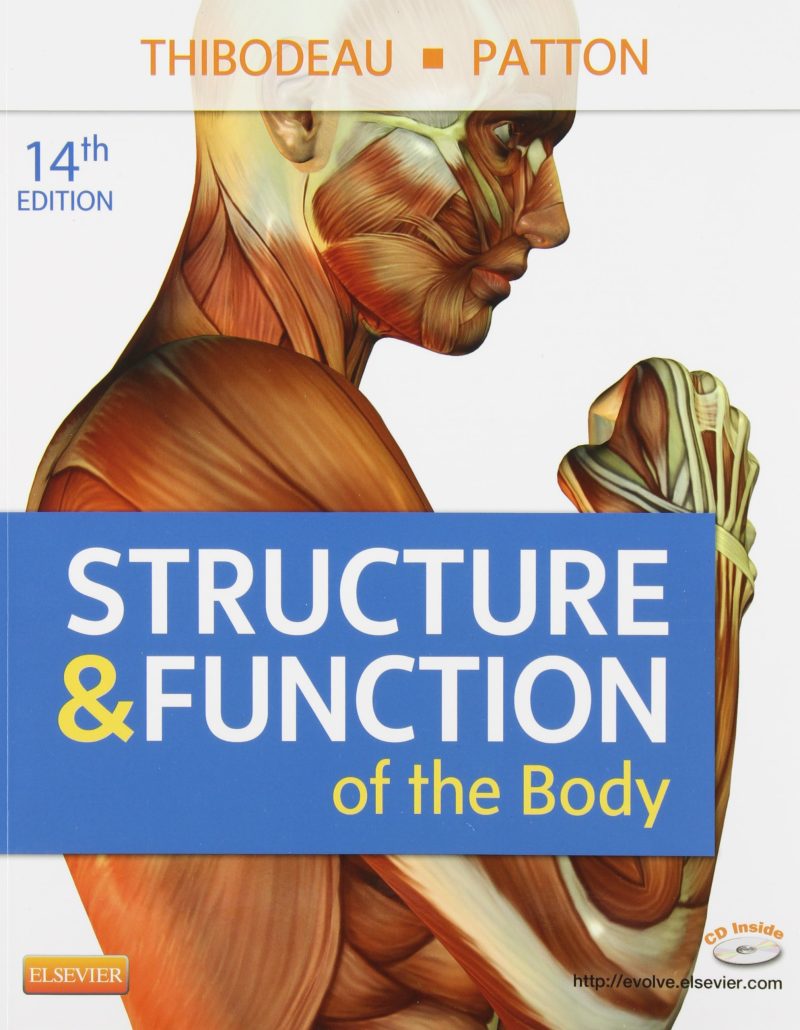
Test Bank for Structure and Function of the Body 14Edition Thibodeau
$55.00Original price was: $55.00.$30.00Current price is: $30.00.
Digital item No Waiting Time Instant DownloadISBN-10: 0323077226 ISBN-13: 978-0323077224Publisher : Elsevier; 14th editionAuthors: Gary A. Thibodeau, Kevin T. Patton
In the medical education landscape, having the right resources is critical to achieving success. The Test Bank for Structure and Function of the Body 14th Edition by Thibodeau is useful for both students and educators. This test bank features an extensive set of questions and answers which are in sync with the textbook, making you fully equipped to tackle exams as well as practical applications.
Why Choose This Test Bank?
We know how difficult mastering intricate medical concepts can be. This is why this test bank has been made to help you with your learning. You are able to effectively practice thanks to the questions given which are similar to the actual exams and thus are able to gain more confidence regarding the information you have learned.
Key Topics Covered
The test bank covers a broad range of core concepts which include the following.
Basic Anatomy and Physiology: Describe the structures and functions of the body of a human.
Body Systems: Answer questions about each body system individually, including the circulatory and nervous systems.
Homeostasis: Discuss the mechanisms used by the body to maintain balance and stability.
Cell Structure and Function: A closer look at the specifics of cell biology and its effects on health.
Advantages of Test Bank for Structure and Function of the Body
Utilising the Test Bank for Structure and Function of the Body involves various pros and benefits to students. Some of them are as follows:
Improvement of Knowledge: Practice-answer emphasis requires students to be well conversant with important concepts.
Optimised Use of Time: Give attention to information that is most appropriate to the content of the textbook.
Psychological Well-being: Develop faith in what you know and what you can do in such a way that you do not become anxious when taking an examination.
Instructions for Test Bank Usage
To derive maximum satisfaction from this test bank, the following tips are of great value:
Routine Integration: Include questions from the test bank into what you do on a day to day basis so practice is done.
Focus on the Gaps: Employ the test bank so that you can discover the gaps that require more intensive study and practice.
Practice Exam’s Required Conditions: Get used to working under time limits to get better skills in managing time during the real tests.
Real-Life Applications
For most students, comprehension of the structure and function of the body is based on passing their examinations. However in real life understanding of one structure informs one’s function. This test bank will be useful regardless of whether a student is starting their career in the healthcare industry or a practitioner who wants to brush their skills.
Summary
For those intending to excel in anatomy and physiology, the Test Bank for Structure and Function of the Body 14th Edition by Thibodeau is a worthy investment for any serious professional. Since this test bank is well rounded and practical, it can assist in both the educational and the professional growth of any individual.
Test Bank for Structure and Function of the Body 14E Thibodeau
Thibodeau & Patton: Structure & Function of the Body, 14th Edition
Chapter 01: An Introduction to the Structure and Function of the Body
Test Bank
MULTIPLE CHOICE
1.The word derived from two Greek words meaning “a cutting up” is:
a.
physiology
b.
homeostasis
c.
anatomy
d.
dissection
ANS: C DIF: Memorization REF: Page: 1
TOP: Introduction
2.The study of how the body functions is called:
a.
physiology
b.
homeostasis
c.
anatomy
d.
dissection
ANS: A DIF: Memorization REF: Page: 1
TOP: Introduction
3.The correct sequence of the level of organization is:
a.
cellular, chemical, tissue, organ
b.
chemical, cellular, tissue, organ
c.
chemical, cellular, organ, tissue
d.
chemical, tissue, cellular, organ
ANS: B DIF: Memorization REF: Page: 3
TOP: Structural levels of organization
4.The smallest living unit of structure is considered to be at the:
a.
chemical level
b.
cellular level
c.
organ level
d.
tissue level
ANS: B DIF: Memorization REF: Page: 3
TOP: Structural levels of organization
5.The reference position for all body directional terms is the:
a.
anatomical position
b.
prone position
c.
supine position
d.
sitting position
ANS: A DIF: Memorization REF: Page: 5
TOP:Anatomical position
6.The relationship between the knee and the ankle can be described as:
a.
the knee is inferior to the ankle
b.
the knee is distal to the ankle
c.
the knee is proximal to the ankle
d.
both a and b above
ANS: C DIF: Application REF: Page: 5 TOP: Anatomical directions
7.The relationship between the heart and the lungs can be described as:
a.
the heart is distal to the lungs
b.
the heart is medial to the lungs
c.
the heart is lateral to the lungs
d.
both a and c above
ANS: B DIF: Application REF: Page: 5 TOP: Anatomical directions
8.The term most opposite proximal is:
a.
medial
b.
superior
c.
anterior
d.
distal
ANS: D DIF: Memorization REF: Page: 5
TOP: Anatomical directions
9.Because humans walk in an upright position, the two terms that can be used interchangeably are: